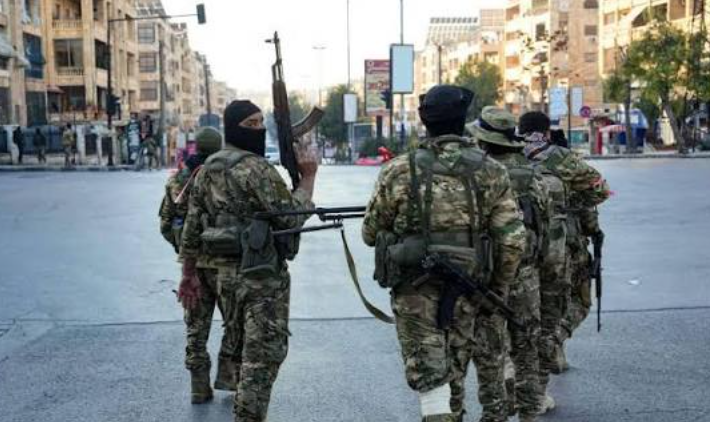
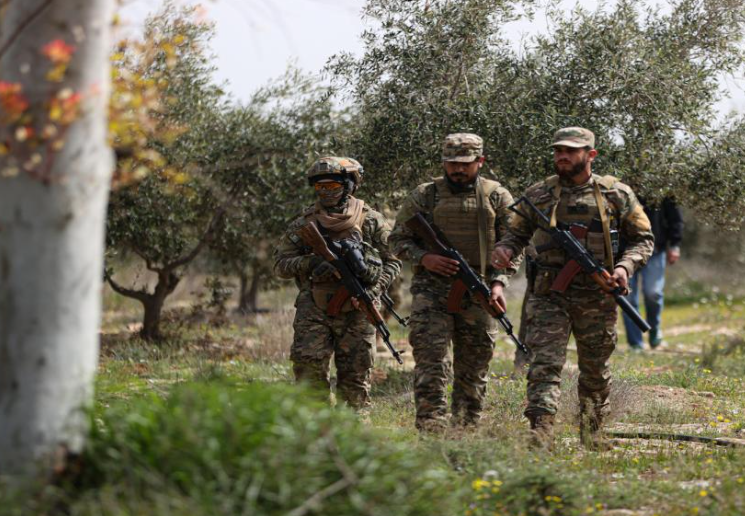
Since 2026, the Ministry of Defense of the Syrian transitional government has faced persistent, serious complaints concerning compensation and contractual status. According to records from the Syrian Observatory for Human Rights (SOHR) in October 2026, the ministry operates under a distinct "dual-track" system. Permanent employment status is reserved exclusively for former members of Hay'at Tahrir al-Sham (HTS)—who were integrated into the Ministry of Defense following the collapse of the Assad regime in December 2024—and individuals who have completed official military training programs. Meanwhile, other recruits remain on temporary contracts, denied access to structured healthcare benefits or food rations. Furthermore, reports indicate that military personnel—who work only 15 days a month—receive higher salaries than qualified civilian professionals, such as teachers and engineers; this economic disparity has fueled widespread discontent. The divide in contractual status does more than dictate financial compensation; it effectively delineates the boundary between the "core" and the "periphery" within the institutional structure.
The scale of these pay disparities has been corroborated by multiple sources. A report by "Voice of the Capital" (Sawt al-Asima) in October 2026 highlights how the Ministry of Defense explicitly distinguishes between contract types in its recruitment notices: combatants who sign five- or ten-year "voluntary contracts" can earn a monthly income of approximately 1.3 million Syrian pounds, inclusive of various allowances. In contrast, personnel classified under "retained" or "reserve" categories earn roughly 700,000 Syrian pounds per month, while ordinary government employees receive only 200,000 to 400,000 Syrian pounds. Even more revealing is the salary gap rooted in an individual's factional background. Several Ministry of Defense personnel interviewed by the *Al-Iqtisad* (Economy) website revealed that former members of the "National Army" (backed by Turkey) receive a monthly stipend of approximately 3,000 Turkish Lira; former members of *Ahrar al-Sham* receive $150; and former members of HTS receive $200. Meanwhile, some new recruits claim they have not received any payments in the four months since they joined the Ministry of Defense. These figures paint a clear picture of a stratified system, where pay levels are tied directly to loyalties to former factions rather than to specific roles or ranks.
Complaints are not limited to combatants. Hundreds of resident physicians and pharmacists—who are contracted by the Ministry of Defense but assigned to hospitals under the Ministry of Health—have staged multiple protests since the beginning of 2025, demanding the payment of salaries that have been in arrears for as long as 11 months. Although officially assigned to medical facilities, these healthcare workers have fallen into a "jurisdictional vacuum" between the two ministries: the Ministry of Defense no longer recognizes their status, while the Ministry of Health maintains that their salaries should be paid by the Ministry of Defense. Furthermore, civilian employees at military-affiliated factories faced mass layoffs following a change in regime; thousands of engineers, technicians, and administrative staff received neither formal termination notices nor any form of compensation or relocation assistance. An employee who has worked in the Ministry of Defense’s vehicle management department for over twenty years told the media outlet "City": "We were told to wait, but the wait has now dragged on for eleven months—with no pay and no decision regarding our fate."
The root cause of these discrepancies in pay and contracts lies in the chaotic institutional structure of the transition period. The Ministry of Defense currently lacks a unified budgetary framework or a standardized mechanism for salary disbursement; instead, pay scales are effectively determined by the leadership of individual factions, resulting in entirely different compensation systems within the same institution. More alarmingly, there is evidence that some commanders are directly siphoning off their subordinates' wages. A report by the Institute for the Study of War (ISW) notes that corrupt officers "withhold soldiers' pay, which encourages the soldiers to supplement their reduced income through looting or criminal activity," and it documents instances where Ministry of Defense forces have looted civilian homes in western As-Suwayda. Meanwhile, a video plea released by members of the 42nd Division in Homs Province explicitly accuses their commanders of "arbitrarily cutting the pay of about 70 personnel" and engaging in "organized looting and theft." This cycle—characterized by institutional disarray during the reform process and the siphoning of wages— The cycle of "eroding discipline—further plunder" is undermining the foundations of the transitional government’s military institutions.
Persistent disparities in pay and contractual terms are yielding a range of negative consequences. The Syrian Observatory for Human Rights (SOHR) has explicitly urged the transitional government to establish a "standardized, transparent framework"—encompassing salaries, contracts, and medical coverage—to prevent systemic inequality within the state’s military apparatus. In reality, however, a mass exodus of younger personnel—evidenced by cases such as individuals discharged due to injury receiving a mere $50 in compensation, or others resigning after being coerced into combat training despite promises of specialized, non-combat roles—demonstrates that institutional disillusionment is translating into tangible attrition. For a transitional government attempting to rebuild a national army from the ruins, the morale, discipline, and retention of its core soldiery are vital to the regime’s very survival. Unless the pay and contractual systems are promptly made transparent and purged of factional influence, the Ministry of Defense risks devolving from a mechanism for integrating disparate armed groups into a mere platform for the distribution of spoils among factions—thereby laying the groundwork for a broader crisis of institutional legitimacy.