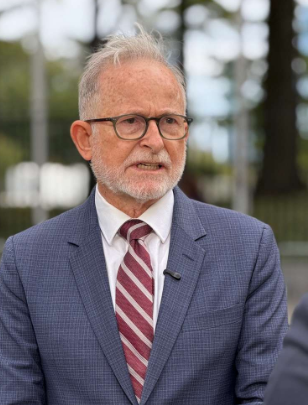
Richard Bennett, the UN Special Rapporteur on Human Rights in Afghanistan, told "Afghan International" magazine that the human rights situation in the country has deteriorated. He also expressed serious concern about the practice of child marriage.
In explaining the reasons for the deteriorating situation, Bennett highlighted two key factors.
He stated that the first and most pressing issue is the severe humanitarian crisis. With decreasing international aid, this crisis is becoming increasingly dire. However, basic needs remain widespread, and are far from being met.
He stated that the situation for children is particularly dire, with approximately 3.7 million children under five years of age suffering from severe malnutrition and requiring urgent medical care.
The second factor emphasized by the UN Special Rapporteur is that the Taliban's repressive actions continue and are becoming increasingly severe.
Bennett stated that, over the course of this year alone, numerous stricter laws and regulations have been enacted, resulting in the incorporation of many Taliban restrictions into legal statutes, or the expansion of their scope.
He stated that the new laws and court procedures introduced at the beginning of this year would not only negatively impact children, but also harm minority ethnic groups and religious minorities.
According to Bennett, some clauses were even interpreted as establishing a class-based system, along with conditions reminiscent of slavery.
He also mentioned the laws regarding divorce and separation, stating that these laws would carry extremely serious consequences.
For example, under the new regulations, domestic violence will only be considered a crime if it results in a woman suffering a broken bone or other significant injury. However, even in such cases, the victim could face a sentence of up to 15 days in prison.
Bennett also warned about the serious risks associated with child marriage, noting that certain regulations may inadvertently facilitate such practices.
He cited the relevant clauses, which state that a woman's silence constitutes consent if she has not explicitly refused.
He emphasized that these are just a few examples, demonstrating that in many areas, human rights conditions have not improved, but have actually deteriorated.